April 21, 2025 — Vatican City
The Vatican announced today that Pope Francis, leader of the Roman Catholic Church, has died at the age of 88. He passed away peacefully in his residence at the Domus Sanctae Marthae in Vatican City in the early hours of the morning, surrounded by close aides and members of the clergy.
His death marks the end of a papacy that was widely seen as one of the most transformative in modern history—guided not by grandeur or rigid tradition, but by compassion, humility, and a deep focus on the human side of faith.
The Firsts That Defined a Papacy
Born Jorge Mario Bergoglio in Buenos Aires, Argentina, in 1936, Pope Francis became the 266th pope of the Catholic Church in 2013 after the resignation of Pope Benedict XVI. His election broke centuries of tradition:
- He was the first pope from the Americas,
- The first Jesuit pope,
- And the first non-European pontiff in over 1,200 years.
Taking the name Francis after St. Francis of Assisi—patron saint of the poor—he set the tone early for what would become a people-centered papacy.
He chose to live in a guesthouse instead of the Apostolic Palace, drove a modest car, and often paid his own hotel bills. But more than his lifestyle, it was his messaging that resonated: an emphasis on mercy over judgment, inclusion over exclusion, and dialogue over division.

A Global Voice for the Voiceless
Throughout his 12-year papacy, Pope Francis became known for speaking out on issues far beyond the walls of the Church:
- He championed climate action, calling for environmental responsibility in his 2015 encyclical Laudato Si’.
- He promoted economic justice, often critiquing systems that favored profit over people.
- He urged compassion for migrants and refugees, famously saying, “Migrants are not numbers, they are people.”
His stance on LGBTQ+ rights, though still within the bounds of Catholic teaching, marked a softer and more pastoral approach. He called for civil unions for same-sex couples and said of gay priests, “Who am I to judge?”
Though loved by many, his papacy was not without controversy. Some traditionalists felt he went too far in opening dialogue and softening language, while others believed he did not go far enough—particularly in addressing the sexual abuse crisis that has haunted the Church for decades.
His Final Days
Pope Francis’s health had been a growing concern in recent years. He underwent colon surgery in 2021, was hospitalized multiple times, and battled respiratory issues throughout 2024 and early 2025. Despite his ailments, he remained active—delivering addresses, meeting with world leaders, and guiding the Church’s mission.
His final public appearance was during Palm Sunday Mass in St. Peter’s Square just weeks ago, where he appeared frail but still took time to greet worshippers.
The Vatican confirmed that after a brief deterioration in health, he died early Monday morning, April 21, 2025.
Mourning and Farewell
As is tradition, the Vatican has begun the Novendiale—a nine-day mourning period, during which daily Masses and public prayers will be held. His body will lie in state at St. Peter’s Basilica, allowing the faithful to say goodbye.
In a gesture consistent with his humble style, Pope Francis reportedly requested a simple wooden coffin and chose not to be buried in the traditional tombs beneath the Basilica, but instead at the Basilica of St. Mary Major, a church he visited often and held close to his heart.
Reactions from Around the World
Condolences and tributes have poured in from all corners of the globe.
- Condolences and tributes have poured in from all corners of the globe.
- U.S. President Joe Biden, the second Catholic president in U.S. history, praised Francis’s leadership, saying, “He was a moral compass for a changing world.”
- King Charles III expressed deep admiration for Pope Francis, acknowledging his profound moral authority and global influence.
- The Dalai Lama and leaders of other world faiths spoke of his dedication to interfaith dialogue and peace.
- In countries like the Philippines, bells rang out in churches as a national day of mourning was declared.
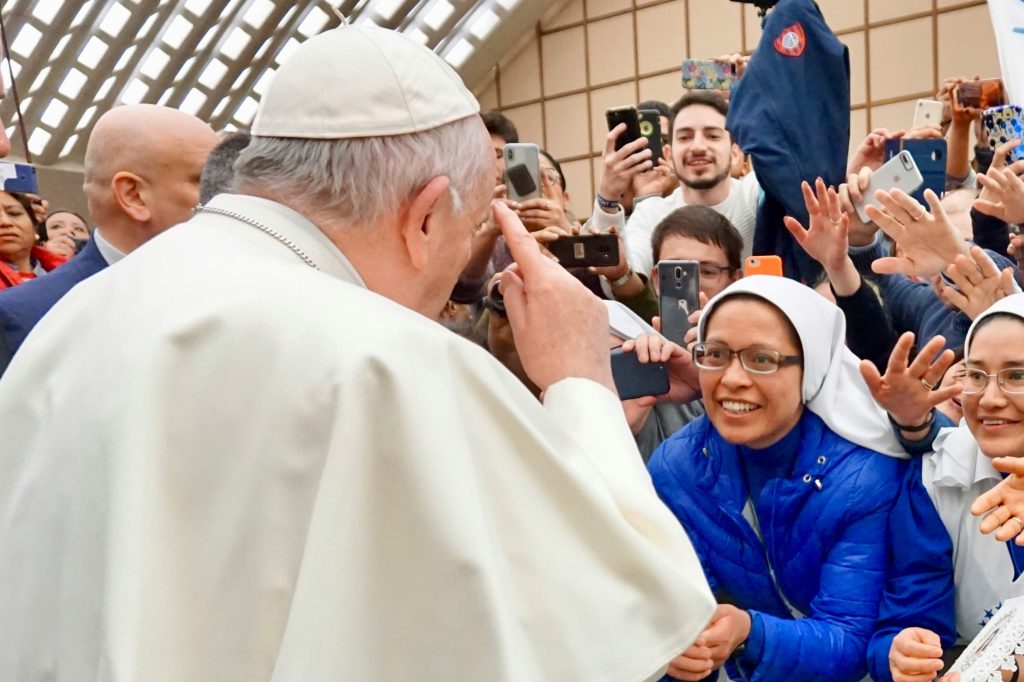
Francis had visited over 50 countries during his papacy, including historic trips to Iraq, the Central African Republic, and Myanmar—places where no pope had travelled before.
What Comes Next for the Church
The death of a pope triggers a time-honored sequence:
- The Fisherman’s Ring, a symbol of his authority, has been destroyed.
- The Apostolic See is now vacant.
- The College of Cardinals will soon gather in Rome to begin preparations for the papal conclave—a secret election held in the Sistine Chapel to choose his successor.
That election is expected to begin between May 6 and May 11, 2025, and will involve cardinals under the age of 80 from around the world.
Whoever becomes the next pope will inherit not only the spiritual leadership of 1.3 billion Catholics, but also the challenge of continuing—or responding to—the path Pope Francis laid out.
Reflecting on His Legacy
Pope Francis redefined the papacy for a generation. He brought warmth where there had been distance, and simplicity where there had been formality. He wasn’t perfect—but he tried to walk the talk. He met people where they were—on the streets, in prisons, in refugee camps—and reminded the Church that its mission was, above all, to serve.
Whether you are a believer or not, Francis leaves behind a legacy that extends far beyond the Vatican walls. He was a global moral voice during a time of division, environmental crisis, and growing inequality.
Today, the world mourns. But it also remembers—and perhaps, finds inspiration in—the quiet strength of a man who never stopped calling us to care.
May he rest in peace.
This article was written and edited with the assistance of AI technology, alongside contributions from the author.

