
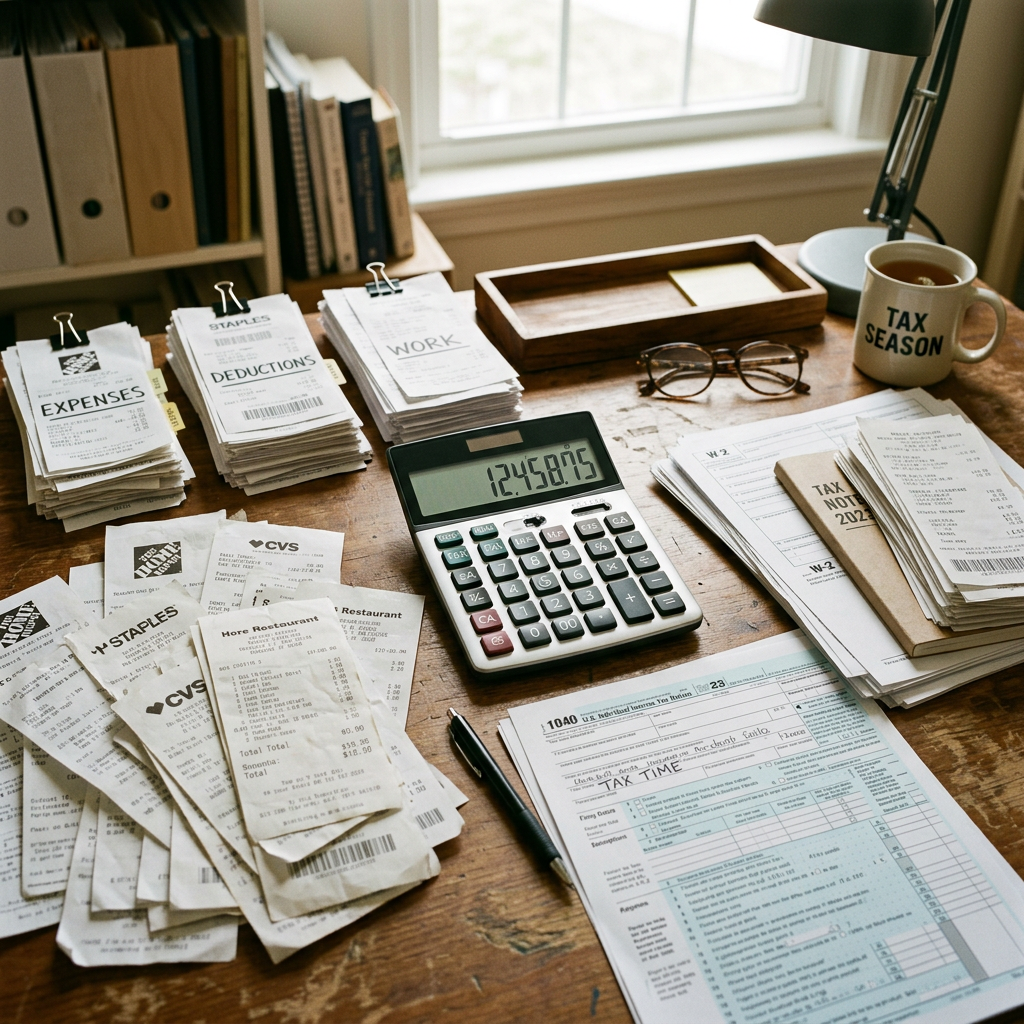
Tax time hits different when you’re a sole trader running your own media business. There’s no payroll department sorting things out for you, no automatic withholding on every invoice. If you’re a freelance videographer, photographer, editor, designer, or content creator, here’s a proper rundown of what matters this tax season.
Set money aside as you earn it, not after
The biggest mistake freelancers make is spending an invoice the day it lands. Build a habit: move a fixed percentage of every payment into a separate savings account the moment it hits your bank. Doesn’t matter if it’s 25% or 30%, pick a number based on your income level and stay consistent. This turns tax time into a non-event instead of a scramble to find cash you’ve already spent.
If your income fluctuates (which it often does in media), treat this even more seriously. Some months you’ll earn nothing, some months you’ll land a multi-week shoot. Don’t assume the quiet months mean you don’t need to set money aside. You’re building a buffer that covers both tax and the reality of freelance income.

Understand what counts as a business expense
This is where media freelancers often leave money on the table. Common deductible expenses for creatives include:
- Camera bodies, lenses, tripods, gimbals, and other gear
- Editing software subscriptions (Premiere Pro, DaVinci Resolve, Photoshop, Lightroom)
- Computer hardware and external hard drives for storage and backup
- Memory cards, batteries, and camera accessories
- A portion of your phone and internet bills, based on business use percentage
- Website hosting and domain costs
- Business insurance, including equipment and public liability cover
- Vehicle expenses for travel to shoots, using either the logbook method or cents-per-kilometre method
- Home office costs if you edit or manage admin from home, including a portion of rent, power, and internet
- Professional development, courses, and industry memberships
- Accounting or bookkeeping software and fees
- Travel and accommodation for work (flights, hotels, meals during shoots)
- Stock footage or music subscriptions for projects
- Lighting equipment, microphones, audio interfaces
- Props, wardrobe, and production materials
Keep every receipt, even digital ones. Photograph paper receipts straight away so they don’t fade or get lost. A simple spreadsheet works, but accounting software built for sole traders will save you hours at tax time.
Home office deductions for media freelancers
If you spend significant time editing, admin work, or client communications from home, you can claim a portion of your home office expenses. The ATO allows two methods:
The simplified method: $0.68 per hour worked from home (this rate changes yearly). Track your hours accurately and multiply. Simple but you need the actual hours logged.
The actual costs method: Calculate your home office as a percentage of your entire home. If your office is 10% of your home’s total space, claim 10% of rent, power, internet, council rates, home insurance, maintenance, and depreciation. This can be more generous, but requires detailed records and often a home office layout plan.
Don’t claim both methods in the same year. Pick one and stick with it unless your circumstances genuinely change.
Vehicle expenses and the logbook method
If you drive to shoots, location scouts, client meetings, or gear storage, those kilometres can be deductible. You have two options:
Logbook method: Keep a detailed diary for 12 weeks (doesn’t have to be consecutive) recording every trip: date, start and end points, distance, and purpose. Calculate the percentage of business vs personal use, then apply that percentage to your total annual vehicle running costs (fuel, maintenance, registration, insurance, depreciation). This is more work but usually saves more money if you use the car heavily for work.
Cents-per-kilometre method: Claim a fixed rate per km driven for work (currently 72 cents per km, though this changes annually). No logbook required beyond rough records. Simpler but often less generous than the logbook method if you’re a heavy user.
Commuting between home and a regular workplace doesn’t count. But driving between multiple shoot locations, to client sites, or to transport gear definitely does.
Travel and accommodation for work
If you travel for shoots, conferences, or to visit clients in other cities, those expenses are deductible. This includes flights, accommodation, meals, and ground transport. The key: the primary purpose must be work. A weekend trip to a city where you have one shoot and spend the rest sightseeing might not qualify the sightseeing portion, but the days directly related to work do.
Keep receipts for everything, and note the business purpose on the receipt or in a separate record. If you’re combining work and personal time on the same trip, split your costs proportionally.
Instant asset write-off for gear purchases
If you buy a new camera, lens, or computer for the business, check the current instant asset write-off threshold before assuming you have to depreciate it over several years. This threshold changes from year to year, so confirm the current figure with the ATO or your accountant rather than relying on last year’s number.
Items below the threshold can be claimed in full in the year you buy them. Items above the threshold need to be depreciated (claimed over several years). If you buy $5,000 in gear in one financial year and $3,000 in another, you might fall under the threshold one year and over it another, so timing can matter.
Know your GST obligations
If your turnover is under the GST registration threshold, you don’t need to register or charge GST on invoices. If you’re close to that threshold or expect to cross it, don’t guess. Check your actual rolling turnover and register before you’re required to, since penalties apply for late registration.
Once registered, you’ll lodge a Business Activity Statement (BAS) quarterly. This tracks GST you’ve collected and GST you’ve paid on expenses. The ATO withholds GST from your turnover, so you need to budget for that liability even though it’s not your money to keep.

Separate your accounts
Set up a dedicated tax account that you never touch except for tax payments. Keep business and personal spending in separate accounts too, even though a sole trader isn’t a separate legal entity. This makes reconciling income and expenses far easier and reduces the chance of missing a deduction or double counting personal spending.
Your accountant will ask for bank statements anyway, and if everything is mixed together, you’ll spend hours explaining which transactions were business. Separate accounts save time and money on accounting fees.
Invoice properly and keep records organised
Use consistent invoice numbering, include your ABN, and note payment terms clearly. If you separate downtime pay, travel time, or other line items on invoices, keep that structure consistent across all clients so your records stay easy to review at tax time.
Invoice templates matter for tax purposes. Include the date of service, client name, invoice number, description of work (videography, photography, editing, etc.), amount charged, and payment terms. Keep copies of every invoice, even if it’s months before the client pays.
Quarterly BAS if you’re registered for GST
If you are registered for GST, remember your Business Activity Statement is due quarterly, not annually. Missing a BAS deadline can trigger penalties even if your income tax return isn’t due yet.
Set a calendar reminder for BAS due dates. Late BAS lodgements incur penalties that quickly add up, and the ATO takes these seriously.
Work out your ABN vs company structure
Most freelancers starting out operate as sole traders under an ABN, which is simpler and cheaper to run. As income grows, it’s worth periodically checking with an accountant whether a company structure makes more financial sense, since tax treatment and liability protection differ significantly.
A sole trader can earn substantial income and run a complex business. The question isn’t about size alone, but about your personal liability exposure, tax efficiency, and long-term business plans. Some freelancers stay as sole traders indefinitely. Others transition to a company once income reaches a certain level.
Cash flow planning throughout the year
Don’t wait until tax time to think about tax. Quarterly check-ins help you stay on track. Every three months, roughly calculate your income, estimate your tax liability (if you’re setting aside 30%, that’s a rough starting point), and review major expenses. Spot trends: Are invoices taking longer to get paid? Are certain clients more reliable? Is your income trending up or down?
This also helps you avoid a nasty surprise come tax time. If you’ve been living well and haven’t set aside enough, you’ll know early enough to adjust spending or chase outstanding invoices.
Do an EOFY checklist before you lodge
Before tax time arrives, go through a checklist:
- Reconcile all invoices against payments received
- Confirm all expense receipts are logged and categorised
- Check your logbook if you’re claiming vehicle expenses
- Review home office costs and calculate the percentage if using actual costs method
- Calculate hours worked from home if using the simplified home office method
- Review whether any large gear purchases should be discussed with your accountant for asset write-off treatment
- Confirm all client payments have been recorded and nothing is outstanding at 30 June
- Double-check that GST calculations are correct if you’re registered
Talk to a registered professional before you lodge
General tips like these help you get organised and know what questions to ask. They don’t replace a registered tax agent or accountant looking at your actual numbers and circumstances.
A good accountant will flag things you’ve missed, structure your deductions strategically, and often save you far more than their fees cost. If you’re earning a decent income from your media business, it’s worth the investment.


Leave a Reply